



According to the UN Office on Drugs and Crime (UNODC), the production and trafficking of methamphetamine – an illegal synthetic stimulant – have risen sharply since 2021, particularly in Myanmar’s Shan State.
UNODC emphasised that both the scale of production and the flow of trafficking in Shan State have “significantly” increased over the past few years.
Record seizures
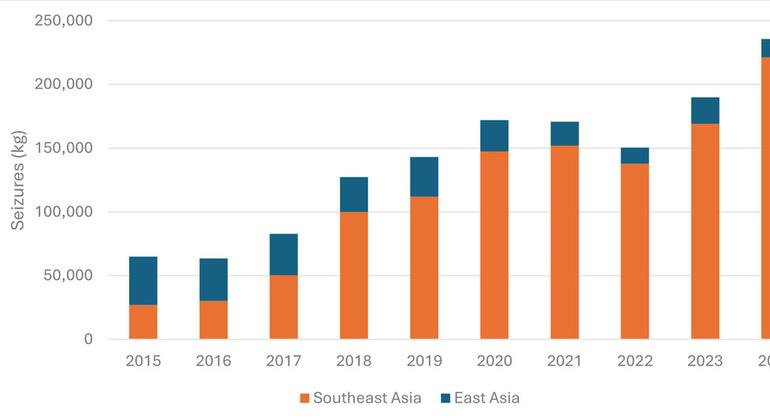
A record 236 tons of methamphetamine (commonly known as meth) was seized in East and Southeast Asia in 2024, a 24 per cent increase from 2023.
However, “the 236 tons represent only the amount seized” and it’s likely that much more is reaching the streets and illicit market, said Benedikt Hofmann from UNODC, describing the amount as “unprecedented.”
Seizures in Southeast Asia represent 85 per cent of the total, with Thailand alone seizing one billion meth tablets.
Conducive conditions
While Thailand remains the main transit and destination point, the drug is mostly produced in Myanmar’s Shan State.
Amid the ongoing civil war involving multiple armed groups, Myanmar’s military regime is experiencing instability and governance challenges that are fuelling the illicit production of synthetic and other drugs.
Although certain areas of Myanmar have been spared from the ongoing conflict and remain stable, “the ongoing crisis in Myanmar is further increasing the need for proceeds from the drug trade,” said Mr. Hofmann.
“This combination of conflict and stability has created favourable conditions for the expansion of drug production impacting countries across the region and beyond,” he said.
Expanding trafficking routes
One of the fastest-growing meth trafficking routes in East and Southeast Asia stretches from Myanmar’s Shan State to Cambodia.
Cambodian authorities notably reported seizing nearly 10 tons of methamphetamine in 2024, representing “by far the largest methamphetamine seizure in history,” said UNODC.
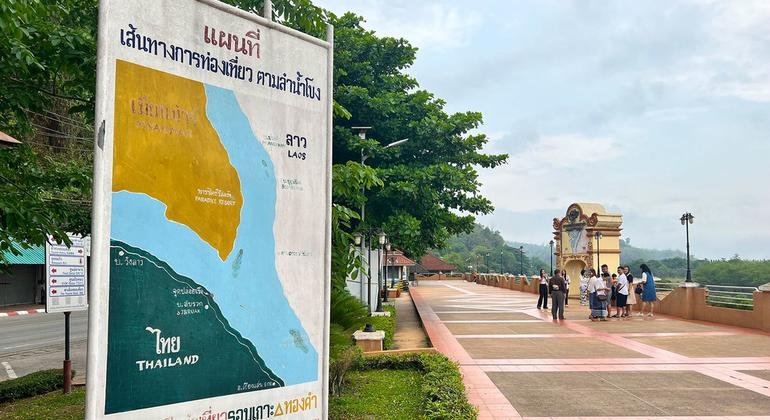
“The trafficking route connecting Cambodia with Myanmar, primarily through Lao People’s Democratic Republic, has been rapidly expanding,” said Inshik Sim, an analyst with UNODC.
As transnational drug trafficking groups continue to exploit new routes to avoid law enforcement, the trafficking corridors connecting Malaysia, Indonesia, and the Philippines are becoming another “increasingly significant corridor,” Mr. Sim added.