



The days of revving your engine at 2 AM are over. New ‘acoustic cameras’ have been deployed across Dubai and Abu Dhabi to detect noise violations automatically. We explain the decibel limits, the fine structure, and the locations.
UAE noise radar fines 2026 have officially been activated this week, marking the end of the road for noisy exhausts and midnight engine revving. For residents of Jumeirah, The Villa, and Khalifa City who have long complained about noise pollution disrupting their sleep, relief has arrived in the form of high-tech acoustic surveillance.
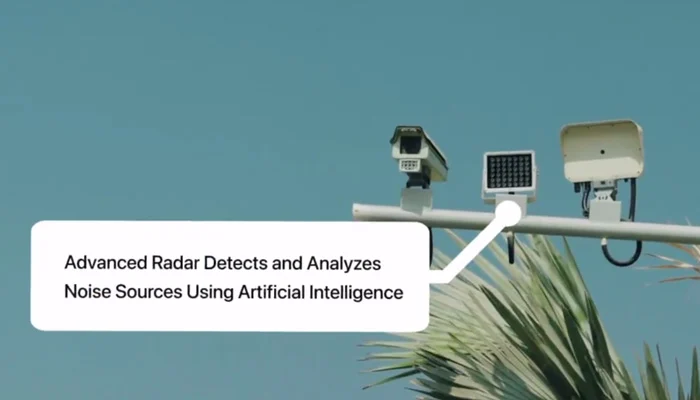
The Ministry of Interior (MOI), in coordination with Dubai Police and Abu Dhabi Police, has rolled out the “Silent Neighborhood” initiative. This smart traffic system utilises advanced “Noise Radars”, devices equipped with microphones and directional sound sensors, to pinpoint vehicles that exceed legal decibel limits.
Unlike speed cameras that measure velocity, these devices measure disturbance. And just like their speed-trapping cousins, they are automated, precise, and unforgiving.
How the Tech Works: “Seeing” Sound
The technology, which was piloted in Paris and Sharjah in 2024, has now been fully integrated into the UAE’s smart traffic grid.
The radar consists of a “Hydra” sensor array: four microphones that triangulate the source of the sound to a specific lane and vehicle. It is coupled with a high-resolution camera that captures the license plate.
“The system can distinguish between a honking horn, a construction drill, and a modified exhaust,” explains Captain Ahmed Al-Mansouri of the Traffic Department. “If a sports car revs its engine at a traffic light in a residential zone and exceeds 95 decibels, the camera triggers automatically. The fine is issued within minutes via the police app.”
This eliminates the need for police patrols to manually pull over cars and use handheld meters. The radar is always listening.
The Fine Structure: Up to AED 2,000
The penalties under the new 2026 traffic amendments are severe, reflecting the government’s commitment to quality of life in residential areas.
- First Violation: AED 2,000 fine + 12 Black Points.
- Impoundment: The vehicle can be impounded for 30 days if the noise is caused by illegal modifications (e.g., removing the catalytic converter or installing headers).
- The “Quiet Zone” Doubler: Fines are doubled if the violation occurs near hospitals or schools.
“We are targeting the ‘nuisance drivers’,” says Al-Mansouri. “There is a difference between a high-performance car and a modified car designed to be loud. If you modify your car to sound like a jet engine, you cannot drive it in a neighborhood where children are sleeping.”
Read: UAE AI Skills Gap 2026: Why the Class of ’26 is About to Eat the Class of ’96 for Lunch
The Locations: Where are the Ears?
While the police do not publish a full map of all radars, community reports and official statements indicate the rollout is focused on “hotspots” for cruising and street racing.
Dubai Hotspots:
- Jumeirah Beach Road
- Al Wasl Road
- Hessa Street (near residential clusters)
- Motor City and Town Square entrances
Abu Dhabi Hotspots:
- Al Bateen
- Khalifa City A
- The Corniche
Crucially, the radars are also being installed on the Hatta-Dubai Road and Jebel Hafeet roads to curb the noise from weekend motorbike groups that disturb local wildlife and residents.
The “Stock vs. Modified” Debate
The new law has sparked a heated debate in the UAE’s vibrant car enthusiast community. Owners of high-end supercars (Ferraris, Lamborghinis) are concerned that their factory-standard exhausts might trigger the fines.
The Ministry has clarified this: “Factory-stock vehicles from certified manufacturers are compliant. The algorithm accounts for the ‘sound signature’ of stock supercars. The target is the aftermarket modification that bypasses noise dampening.”
However, owners of older muscle cars and modified JDMs (Japanese Domestic Market cars) are scrambling to reinstall stock mufflers. Garages in Al Quoz report a 300% spike in bookings for “exhaust silencing” services this month.
“I had to remove my straight-pipe setup yesterday,” says Karim, a Mustang owner. “It cost me AED 3,000 to put the stock system back on, but that’s cheaper than one fine and impoundment.”
Health and Wellbeing
The push for silence is not just about annoyance; it is about health.
Studies cited by the Dubai Health Authority (DHA) link chronic noise pollution to hypertension, sleep disorders, and stress. By enforcing a “sonic ceiling” of 95dB in living areas, the UAE aims to lower the collective blood pressure of the city.
The Sound of Silence
As the UAE noise radar fines 2026 take effect, the soundscape of the city is changing. The midnight roar of engines on Jumeirah Beach Road is being replaced by the hum of electric vehicles and the quiet woosh of standard traffic.
For the petrolhead, the party is over. But for the family trying to put a baby to sleep in Al Wasl, the silence is golden.