


It’s not just about saving the planet. It’s about dominating the future energy market. Here is the economic blueprint behind the UAE’s multi-billion dollar hydrogen strategy.
For half a century, the global energy equation was simple: The Gulf pumps, and the world buys. But as 2026 approaches, the calculus is changing. While the world argues about the pace of the energy transition, the United Arab Emirates has quietly moved past the debate and onto the execution.
The nation is orchestrating one of the most sophisticated economic pivots in history: transitioning from a “Petro-State” to an “Energy Superpower.” At the heart of this strategy is Green Hydrogen, a resource that policy-makers in Abu Dhabi believe will carry the same geopolitical weight in 2050 that crude oil did in 1950.
For investors and corporate leaders, understanding this shift is no longer optional. The UAE’s National Hydrogen Strategy isn’t just an environmental pledge; it is a masterclass in industrial policy, designed to capture 25% of the global low-carbon hydrogen market by 2030.
The Economics of the Molecule
Why Hydrogen? And why now?
The answer lies in the “hard-to-abate” sectors. While electric vehicles can decarbonize our roads, batteries simply cannot power heavy steel plants, shipping vessels, or long-haul aviation. These industries require a high-density fuel molecule, not just an electron. That is where hydrogen enters the room.
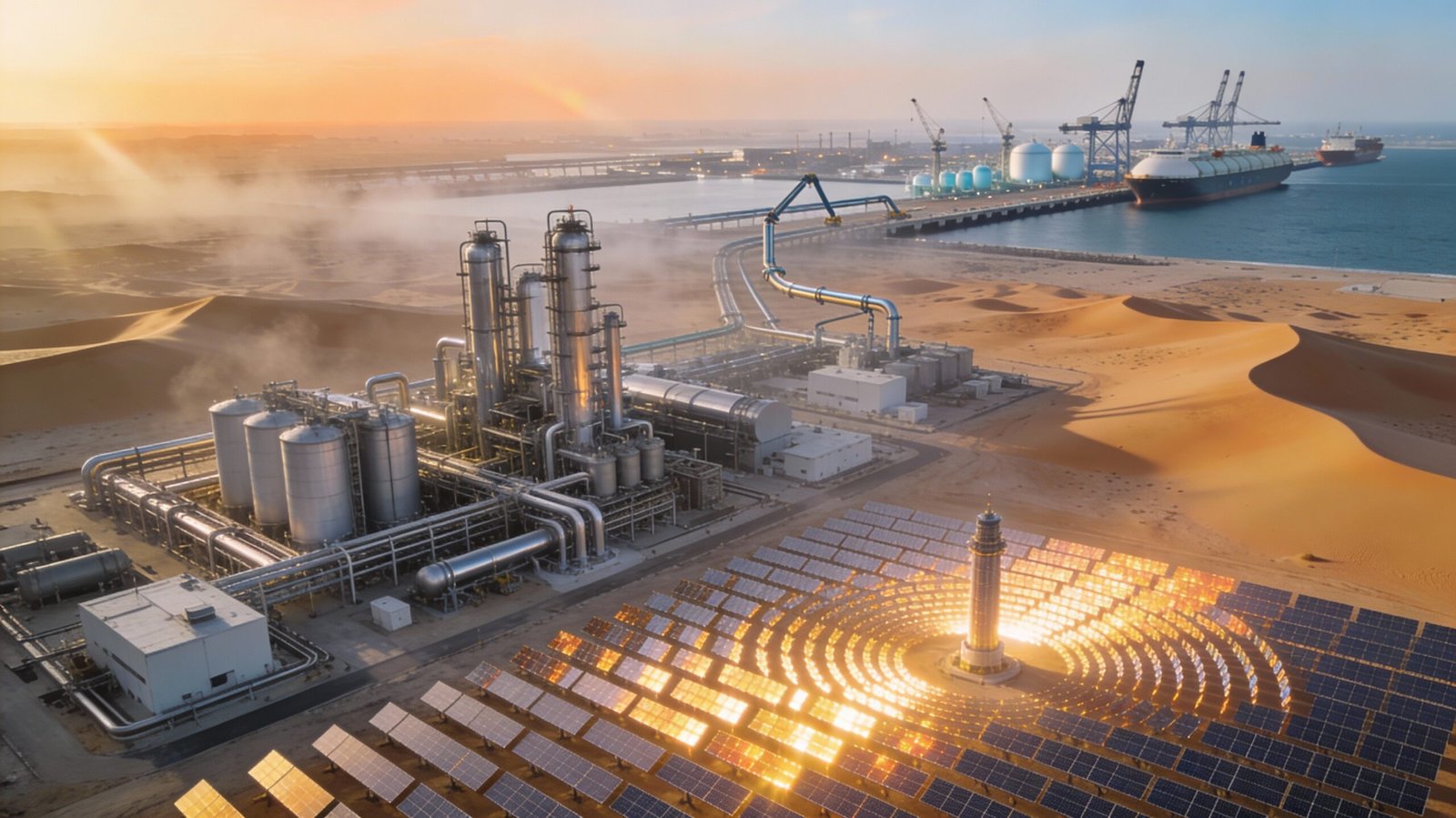
The UAE’s competitive advantage here is lethal. Green hydrogen is produced by splitting water using renewable electricity. The biggest cost driver is the price of solar power. Abu Dhabi holds the world record for the lowest solar energy production costs. In simple terms: The UAE can make the fuel of the future cheaper than almost anyone else on earth.
The “Masdar” Effect
Leading this charge is Masdar, the UAE’s clean energy powerhouse. Unlike Western private equity firms that operate on quarter-to-quarter horizons, Masdar operates on a generational timeline, backed by sovereign capital.
In the last 12 months alone, we have seen a flurry of strategic alliances that signal the scale of this ambition. From agreements with German utility giants to secure export corridors for hydrogen derivatives, to partnerships with Japanese heavy industry for blue ammonia, the infrastructure is being laid before the market has even fully matured.
This is the classic “Dubai Model” applied to energy: Build the port (or in this case, the hydrogen plant), and the trade will follow.
D33 and the Industrial Ripple Effect
This strategy feeds directly into the Dubai Economic Agenda (D33) and the wider “Make it in the Emirates” campaign. The goal isn’t just to export hydrogen; it is to use cheap, clean energy to attract heavy manufacturing to the UAE.
If you are a European steel manufacturer facing crippling energy costs and carbon taxes at home, the UAE’s proposition is becoming irresistible: Relocate your energy-intensive operations to Khalifa Industrial Zone (KIZAD), plug into our cheap solar-hydrogen grid, and export your “Green Steel” back to the world tariff-free.
This is the hidden economic multiplier. The hydrogen strategy is actually a manufacturing strategy in disguise.
The Investor Outlook for 2026
For the C-Suite executive reading this, the implications are three-fold:
- Infrastructure Opportunities: The build-out of electrolyzers, storage tanks, and specialized pipelines requires billions in FDI. The tender pipeline for 2026 is expected to be robust.
- The “Green Premium”: Companies that secure supply contracts for UAE green hydrogen early will hedge themselves against the volatility of future carbon pricing.
- Policy Stability: Unlike the flip-flopping energy policies seen in some Western capitals, the UAE offers a fixed, long-term regulatory roadmap. Capital hates uncertainty, and Abu Dhabi is selling certainty.
The skeptics will say we are years away from a fully viable hydrogen economy. They are right about the timeline but wrong about the trajectory.
The UAE is not betting on where the market is today; it is betting on where the market will be in a decade. By trading hydrocarbons for hydrogen, the Emirates is ensuring that when the last barrel of oil is eventually sold, the lights, and the economy, will stay on.