


As the “Flipping” era fades, a new cycle of sustainable wealth creation begins. From the rise of Ras Al Khaimah to the resilience of Ultra-Luxury, here is the comprehensive outlook for Q1 2026.
If you listen to the global economic chatter, the narrative for real estate in 2026 is one of caution. Interest rates in the West remain sticky, inflation is curbing spending power in Europe, and legacy markets like London and New York are facing a commercial property crisis.
- As the “Flipping” era fades, a new cycle of sustainable wealth creation begins. From the rise of Ras Al Khaimah to the resilience of Ultra-Luxury, here is the comprehensive outlook for Q1 2026.
- The “Golden Visa” Effect: From Tourists to Residents
- The Ultra-Luxury Segment: Immune to Gravity
- The “RAK” Revolution: The Next Frontier
- The “India-UAE” Corridor: The Sleeping Giant
- Prop-Tech and the “Transparency” Premium
- The Strategy for 2026
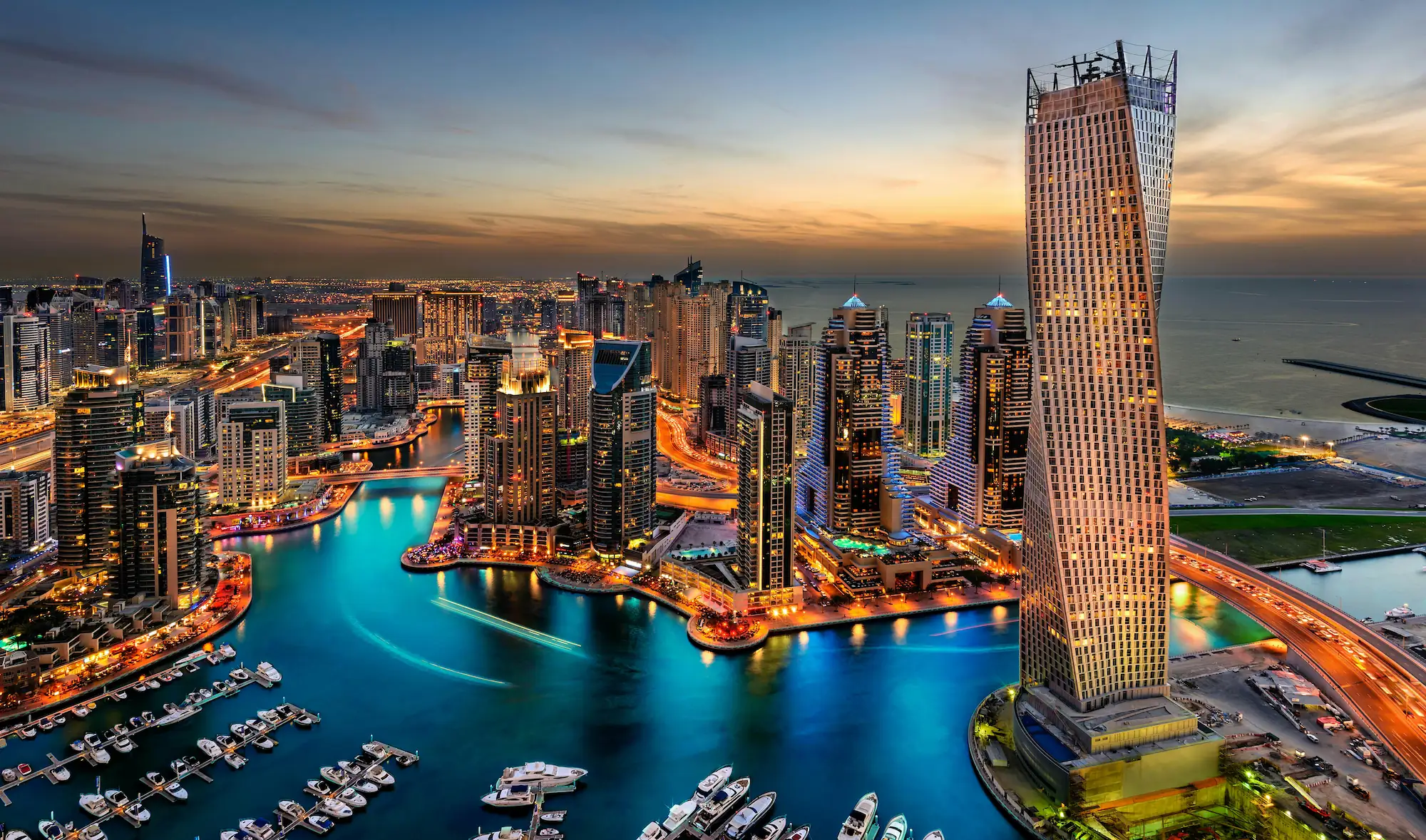
Yet, if you stand on the Sheikh Zayed Road today, the view is very different.
Dubai is currently decoupling from the global real estate cycle. While the world braces for a “soft landing,” the UAE is preparing for a “hard launch” of its next growth phase. Data from the Dubai Land Department (DLD) and independent analysts suggests that 2025 was not the peak of the market, but rather a stabilization plateau before the next leap.
As we approach 2026, the Dubai property market is undergoing a fundamental metamorphosis: It is shifting from a Speculative Market (driven by short-term flipping) to a Mature Market (driven by end-users, long-term migration, and lifestyle infrastructure).
Here is our deep-dive forecast on why smart capital is doubling down on the UAE, and which sectors will outperform in the coming year.
The “Golden Visa” Effect: From Tourists to Residents
To understand the 2026 forecast, one must look at the demographics. In previous cycles (2008, 2014), Dubai’s boom was driven by transient investors. When the oil price dropped, they left.
This cycle is different. The expansion of the 10-Year Golden Visa program has fundamentally altered the buyer profile.
- The Shift: We are seeing a massive influx of High-Net-Worth Individuals (HNWIs) from Europe, the UK, and India who are not buying to rent, they are buying to live.
- The Data: According to recent migration reports, the UAE attracted over 6,000 millionaires in 2025 alone. These are “sticky” residents. They are moving their families, their businesses, and their wealth to Dubai.
Impact on 2026: This creates a “floor” for property prices. End-users do not panic-sell when the market dips. They hold. This stability will reduce volatility in 2026, making Dubai a “Safe Haven” asset class comparable to Singapore or Switzerland.
The Ultra-Luxury Segment: Immune to Gravity
While the “affordable” housing segment may see a slight correction due to new supply coming online in Dubai South, the Ultra-Luxury segment (properties priced above AED 20 Million) remains critically undersupplied.
Wealth does not rely on mortgage rates. Cash buyers dominate this space, rendering interest rate hikes irrelevant.
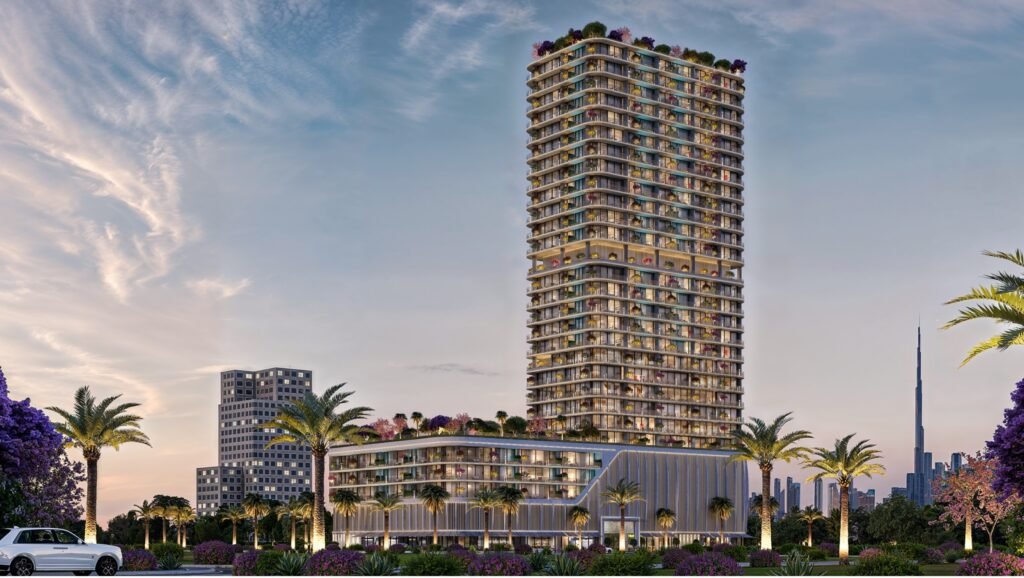
The Rise of “Boutique Luxury” A key trend for 2026 is the shift away from mass-market towers toward bespoke, branded living. Discriminating buyers are no longer satisfied with just an address; they want a lifestyle.
This is where agile, luxury-focused developers are outperforming the market. Firms like Anax Developments have correctly identified that the modern buyer wants “Hyper-Luxury”—privacy, curated amenities, and architectural significance.
“The buyer of 2026 is not looking for a box in the sky,” notes a senior consultant at Knight Frank Middle East. “They are looking for a trophy asset. Developers who focus on quality over quantity—like we see with the boutique projects rising in Business Bay and Meydan—will continue to command premium prices per square foot.”
For investors, the strategy for 2026 is clear: Quality is the hedge. Grade-A assets in prime locations will continue to appreciate, while generic mid-market units may stagnate.
The “RAK” Revolution: The Next Frontier
If Dubai is the “Blue Chip” stock, Ras Al Khaimah (RAK) is the high-growth “Unicorn.”
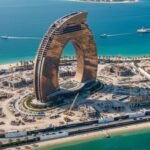
The upcoming opening of the Wynn Al Marjan Island (the UAE’s first gaming resort) is a game-changer of historic proportions. It has triggered a “Gold Rush” in the northern emirate, with investors scrambling to secure waterfront assets before the resort opens its doors.
Why RAK in 2026?
- The Price Gap: RAK waterfront property is still significantly cheaper than the Palm Jumeirah, yet the rental yield potential (driven by gaming tourism) is projected to be higher.
- Infrastructure: The expansion of RAK’s transport links and airport capacity signals that the government is preparing for millions of new visitors.
Investors who felt priced out of Dubai’s Palm Jumeirah in 2010 have a second chance with Al Marjan Island. 2026 will likely be the year RAK prices begin to narrow the gap with Dubai.
The “India-UAE” Corridor: The Sleeping Giant
While European buyers grab headlines, the Indian investor remains the bedrock of the Dubai market. With the India-UAE CEPA trade deal aiming for $100 Billion in non-oil trade, the cross-border flow of capital is accelerating.
However, a new trend is emerging: Institutional Indian Capital. We are no longer just seeing individual families buying holiday homes. We are seeing Indian Family Offices and institutional funds entering the Dubai real estate market to diversify their portfolios.
This is creating a massive opportunity for developers who know how to market to this demographic. The developers who build the “Digital Bridge” to India, marketing directly to HNWIs in Mumbai and Delhi—will capture the largest market share in 2026. This reinforces the need for robust Media Infrastructure that connects these two geographies.
Prop-Tech and the “Transparency” Premium
Finally, 2026 will be the year technology cleans up the market. The Dubai Land Department’s push for open data and transparency is attracting institutional money from the US and UK.
“Prop-Tech” is no longer a buzzword; it is a requirement. Investors are demanding real-time data on rental yields, service charges, and ROI. Projects that offer transparent, tech-enabled management (via apps and digital concierges) are trading at a premium.
The Strategy for 2026
So, what is the playbook for the year ahead?
- Don’t Flip, Hold: The days of making 30% on an off-plan resell in 6 months are over. Plan for a 5-year hold horizon.
- Follow the Infrastructure: Buy where the government is building. Dubai South (Airport expansion) and RAK (Tourism expansion) are the clear winners.
- Bet on Brand: In a crowded market, distinctiveness wins. Look for developers (like Anax, Ellington, or Omniyat) who prioritize design and brand identity over mass volume.
Dubai real estate in 2026 is not a bubble. It is a fortress. As the rest of the world navigates uncertainty, the UAE continues to build the future, one skyscraper at a time.